Ganga Aarti
Ganga Aarti at Maa Chandika Devi Dham, Baksar: A Monthly Gathering That Is Strengthening Faith, Community and Local Livelihoods
Introduction
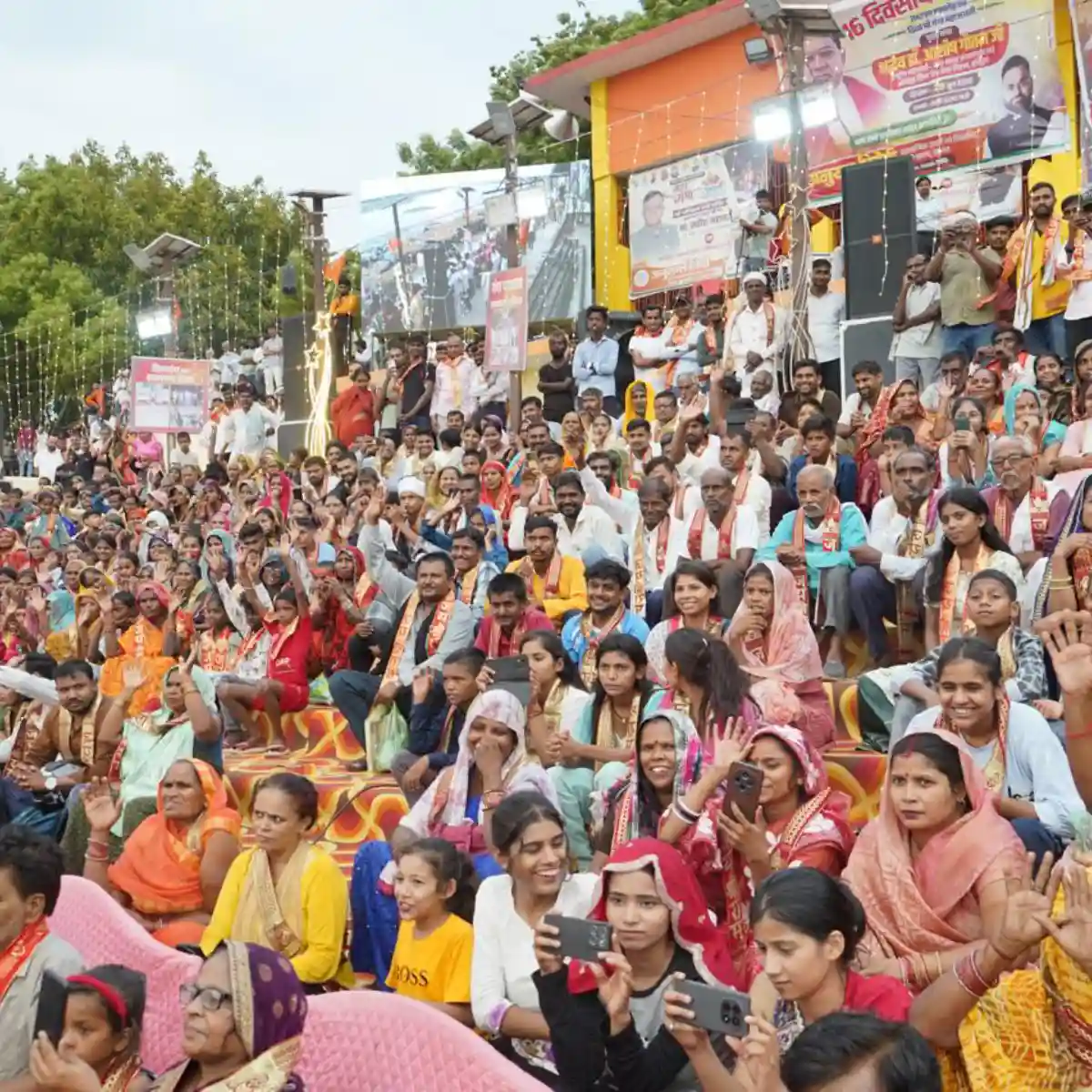
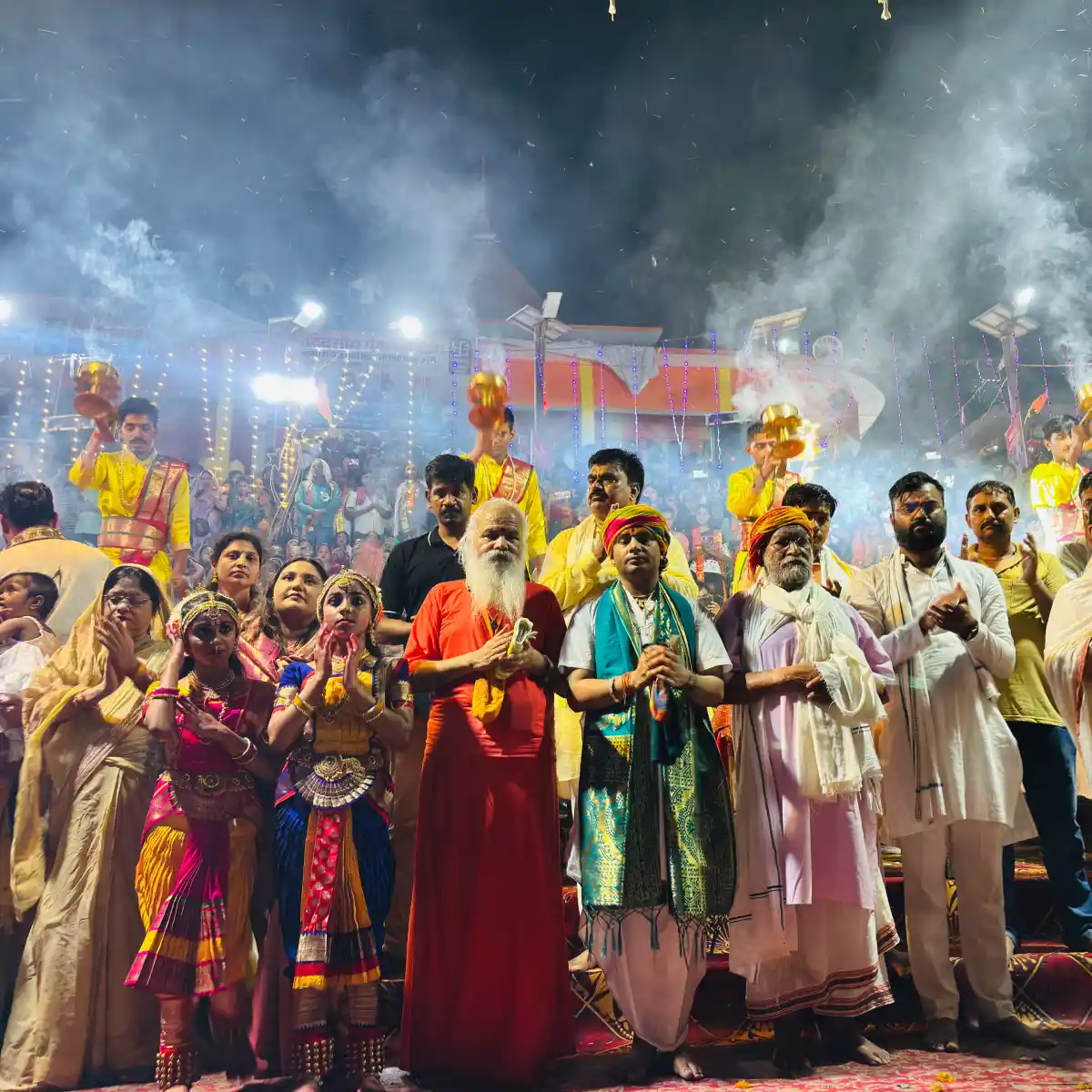
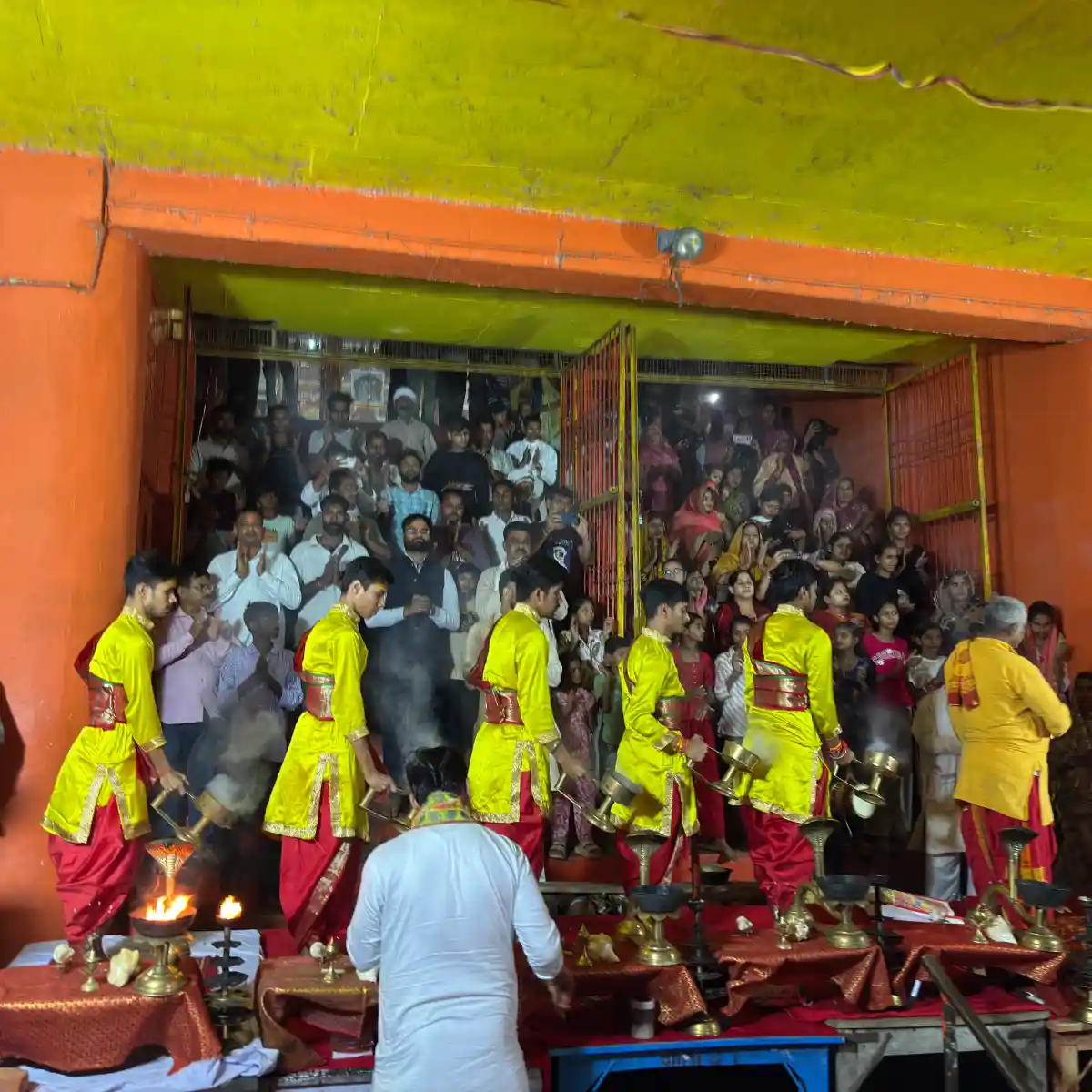
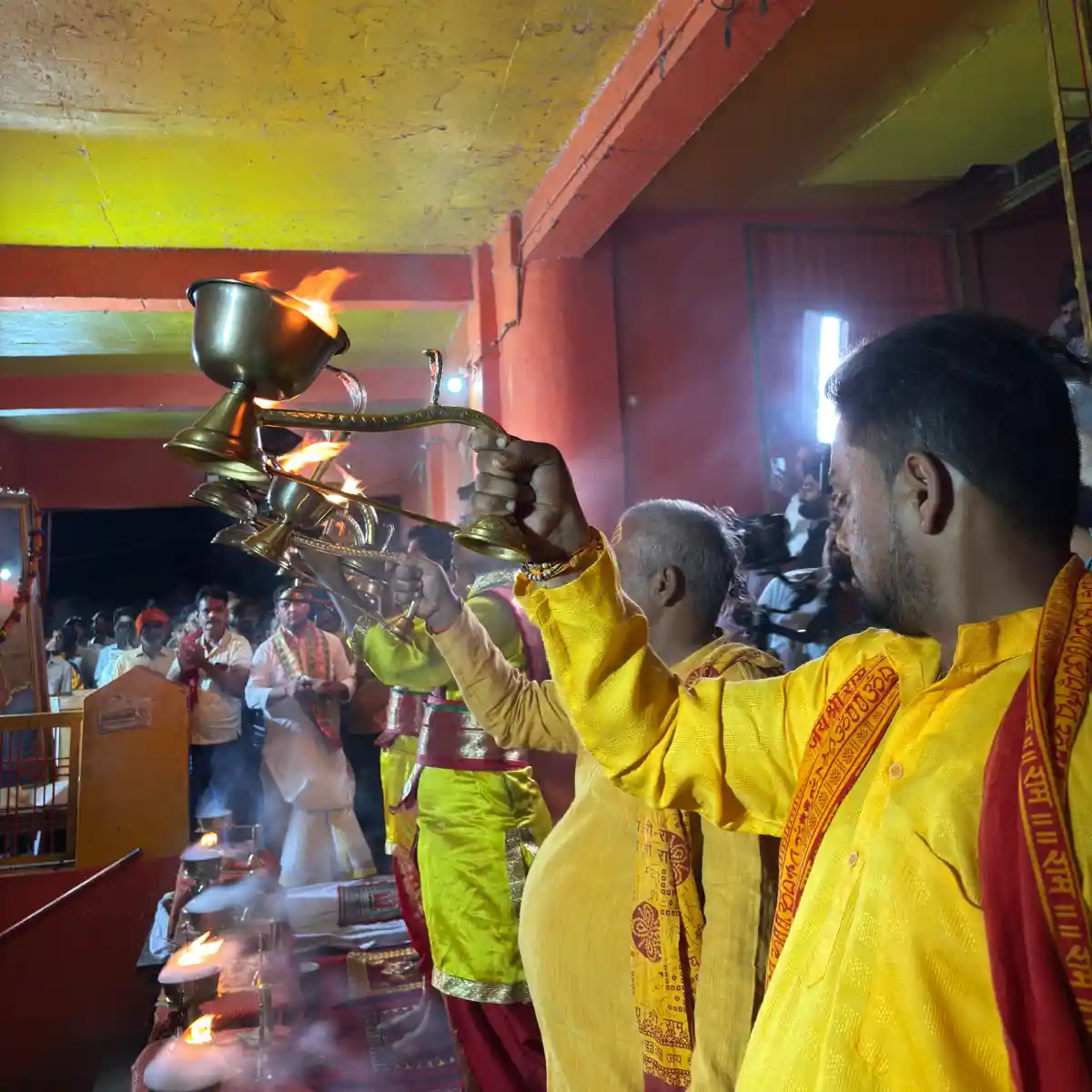
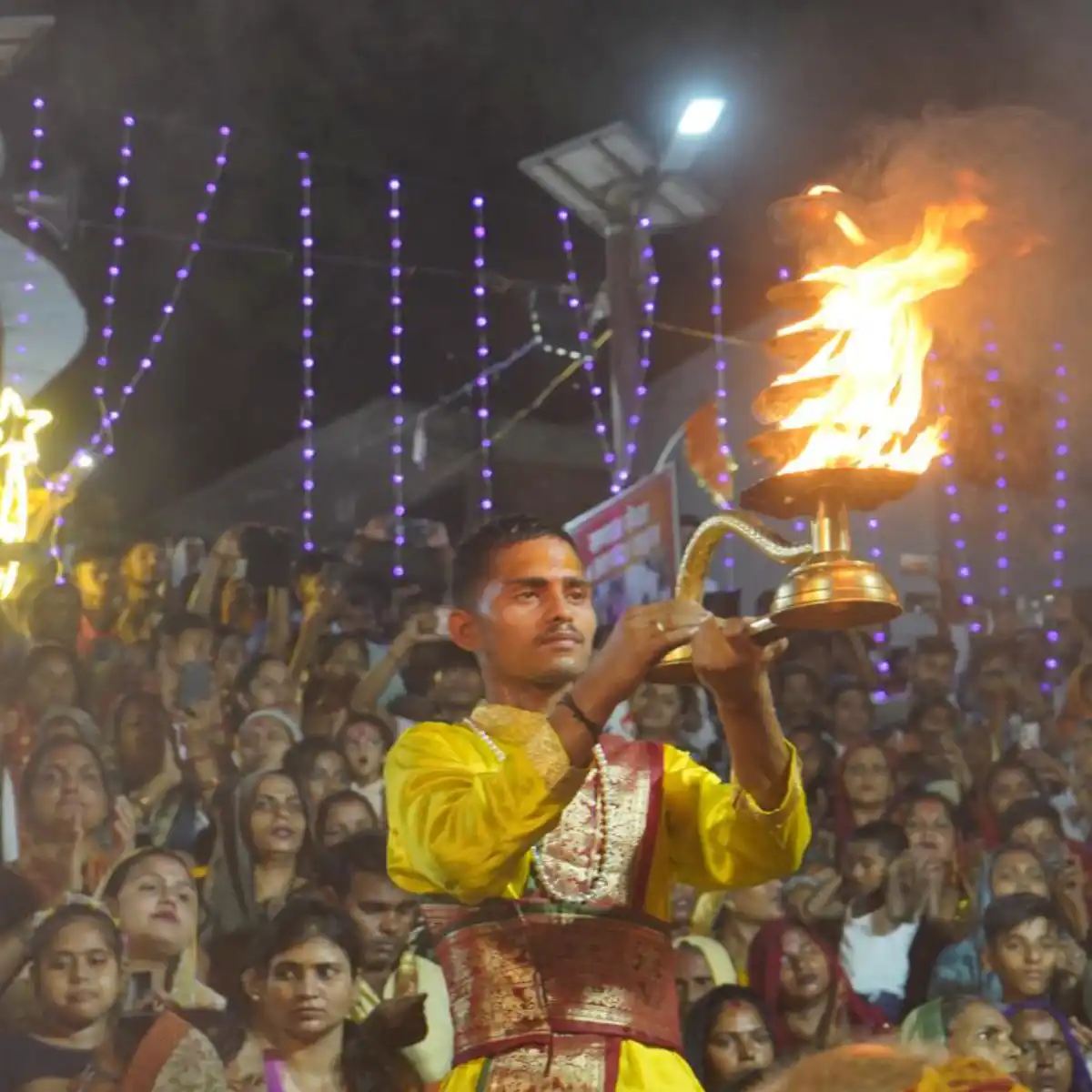
On the banks of the Ganga at Baksar Dham in Unnao district stands the Maa Chandika Devi temple, an important place of worship for the surrounding region. Since February 2026, a grand Ganga Aarti has been held here on every Purnima (full moon). The evening ritual begins with bhajan-kirtan and continues with the lighting of lamps and the chanting of mantras on the ghat. On average, more than 30,000 devotees attend each aarti, travelling from Unnao and nearby districts. The event is organised under the leadership of Anurag Trivedi, founder of RIT Foundation.
The aarti is a spiritual occasion, but its effects reach well beyond the temple. It brings together people of all ages, supports local livelihoods and has become a regular platform for community service.
A Monthly Tradition Since February 2026
The Ganga Aarti was launched at Baksar Dham in February 2026 and has been held every month since. Some of the notable editions are:
- 19 March: On Hindu New Year and the first day of Navratri, thousands of devotees took part in darshan at the temple and in the Ganga Aarti.
- 1-2 April: The evening aarti drew a very large crowd. Children, women and the elderly took part, and members of different communities contributed to the arrangements.
- 1 May: Thousands attended the aarti on the ghat, which was illuminated for the occasion.
- 30 May: The aarti was completed successfully, with thousands of devotees taking part in the lamp offering and Vedic chanting.
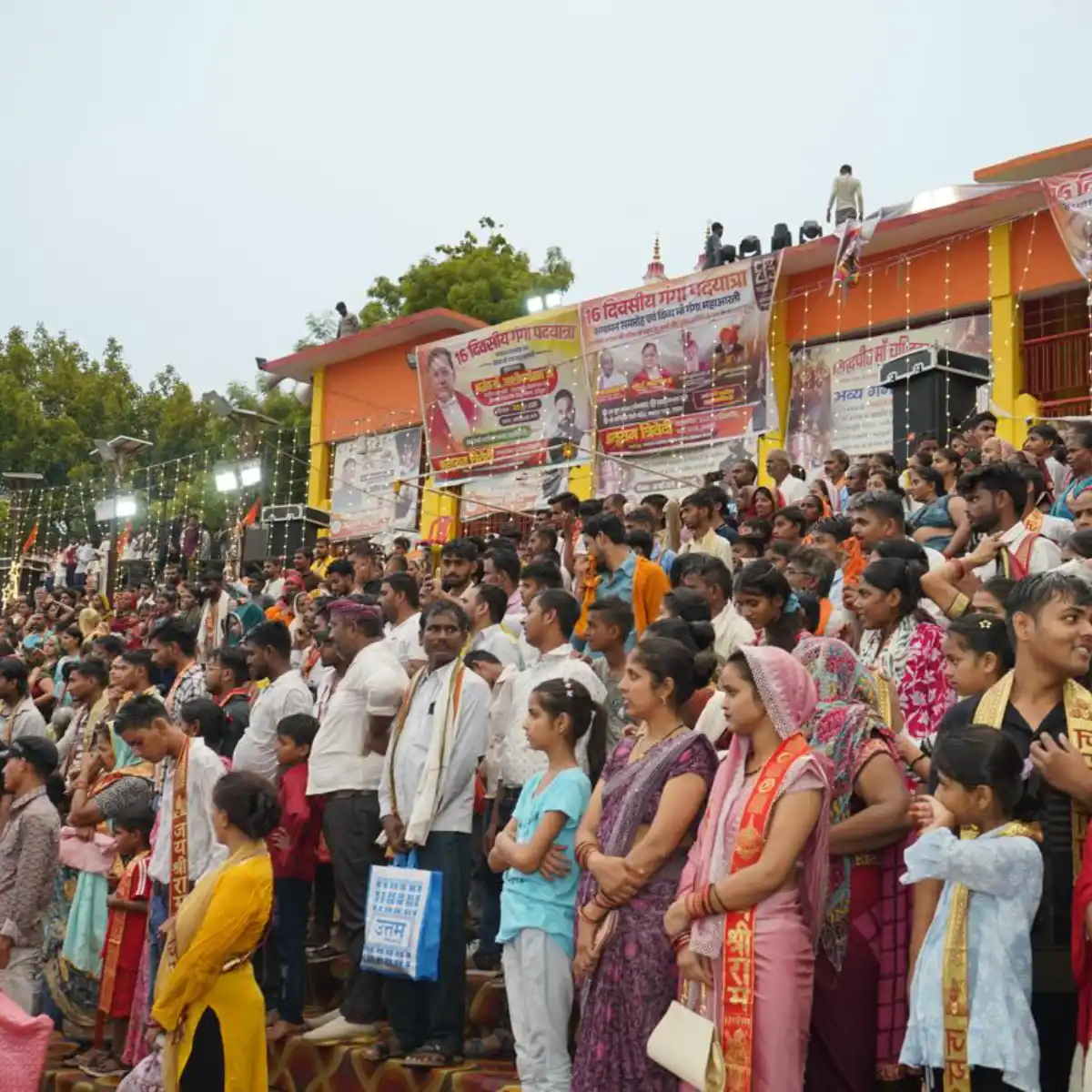
- 30 June: A 16-day Ganga Padyatra concluded at Baksar Dham with a Maha Aarti, bhajan-kirtan and a large community meal (bhandara), attended by thousands. The padyatra carried a message of Ganga conservation and social awareness.
- 29 July: During the monsoon, the Ganga’s water level rose. The aarti was held in a limited form, with the safety of devotees as the priority. The same day began with a cleanliness drive and a floral tribute at the statue of Raja Rao Ram Baksh Singh at the Dham.
- Late August and September: The water level remained high and the weather was heavy with rain, so the aarti was again held in limited form. Faith and participation continued despite the conditions.
The programme has now run through summer heat, the monsoon and flooding, which shows how firmly it has taken hold in the community.
Footfall and Participation
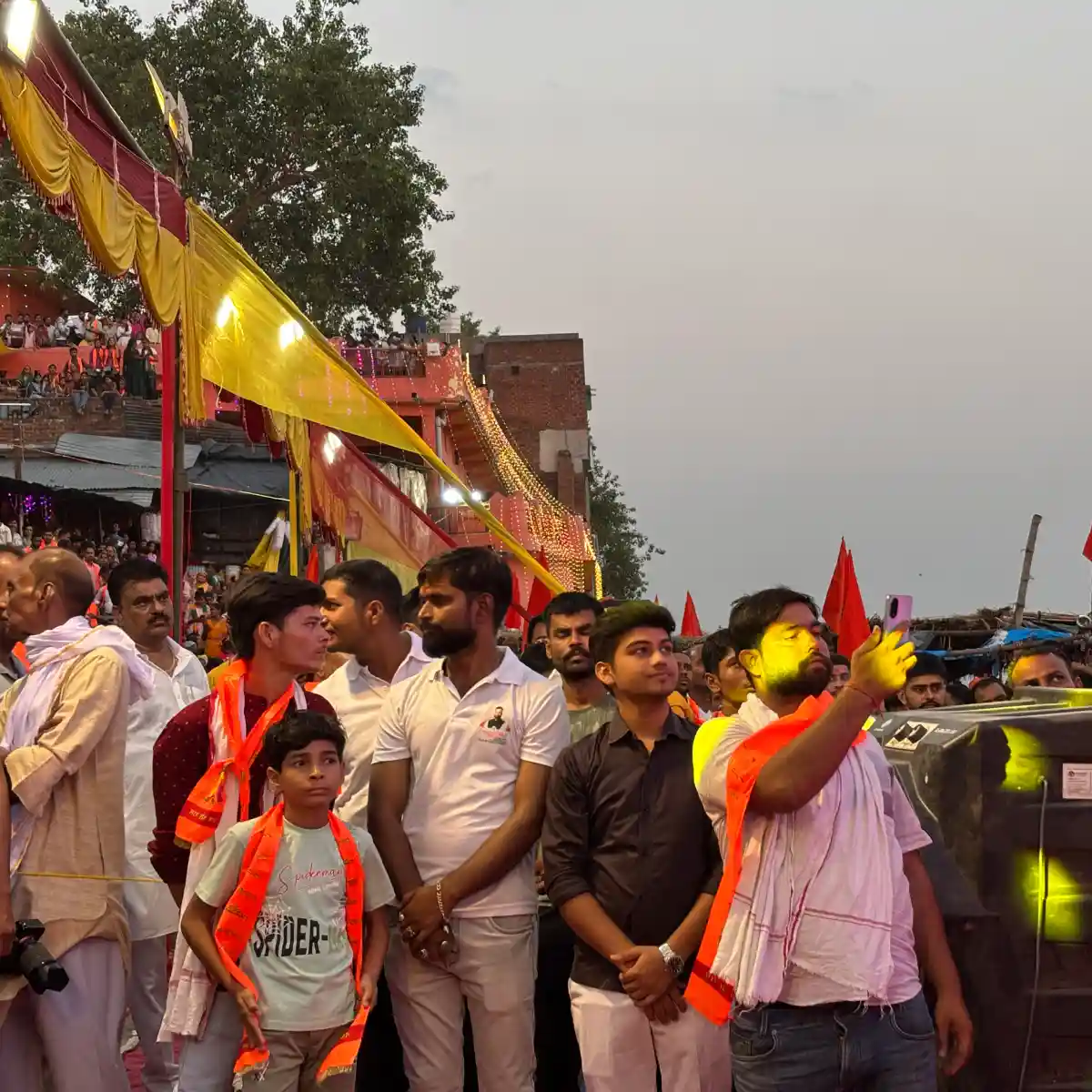
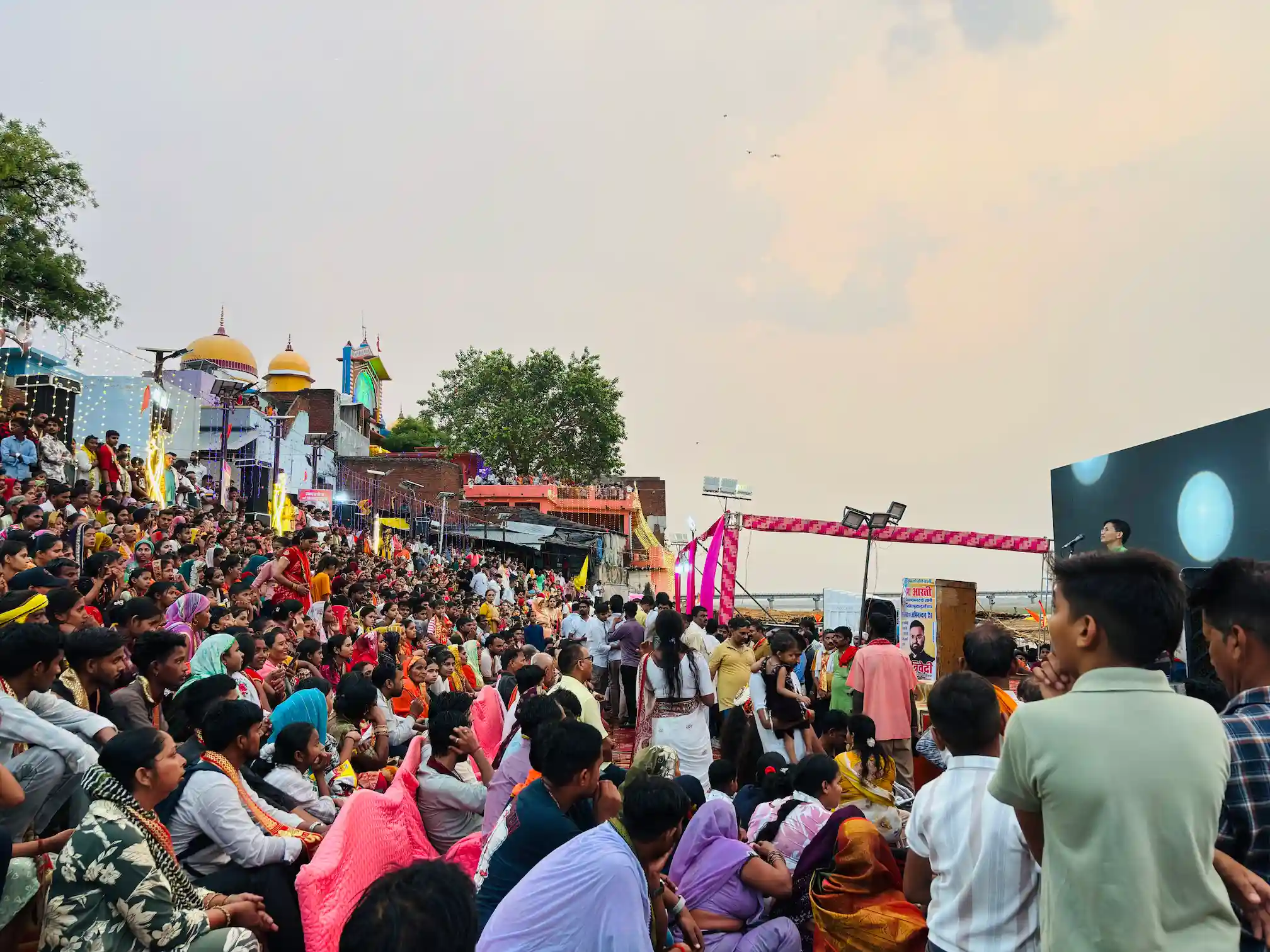
On average, each Purnima Aarti draws a gathering of more than 30,000 people. Over the months since February, this adds up to a cumulative footfall in the lakhs. Devotees travel from villages, towns and neighbouring districts, many of them for the first time.
A crowd of this size needs careful planning, including crowd management, sanitation, drinking water, lighting and medical support. The organising committee, volunteers and local residents share this work.
Economic Impact on the Local Community
Large and regular gatherings create steady demand for local goods and services. Small sellers around the temple and the ghat are among the first to feel it. Snack sellers, samagri (puja material) sellers, toy sellers and other product sellers report that their income has risen by about 40% since the monthly aarti began.
- Snack and food sellers: Visitors who arrive in the afternoon and stay for the evening create strong demand for snacks, tea and refreshments.
- Samagri sellers: Flowers, lamps, incense, prasad and other puja items sell in larger quantities on each aarti day.
- Toy sellers: Families who attend with children make toys and small gift items a regular part of the day’s sales.
- Other product sellers: Vendors of religious items, accessories and daily-use goods also report better business.
- Boatmen and ghat workers: A steady flow of visitors supports livelihoods linked to the river and the ghat.
- Transport and lodging: Auto-rickshaws, taxis, buses, local eateries and guest accommodation benefit from the movement of devotees on and around Purnima.
- Organising and services: Decoration, lighting, sound, catering and security arrangements create temporary work for local people.
Because the aarti takes place every month, this income is regular and not limited to a single festival. A predictable monthly calendar also helps sellers plan their stock and staff, and it gives the temple town a stronger identity as a destination for pilgrims and visitors.
Community Service Alongside Faith
The aarti has also become an occasion for social work. Ambulance services have been dedicated to the local community on the aarti platform, a cleanliness drive has been held at the Dham, and the Ganga Padyatra carried a message of river conservation. A free community meal was served at the conclusion of the padyatra. In August, residents of the constituency were invited to take part in the planned installation of a dharma dhwaja (religious flag) at the temple’s peak by contributing ₹1 per household, so that every family could have a share in the project. This installation is planned for the Ganga Aarti in November.
Connecting Faith with Livelihoods and Skills
The aarti and RIT Foundation’s employment work are closely linked. Four Rozgar Melas held since August have helped more than 2,000 young people from the region find jobs. Together, the two initiatives aim to give the area both cultural vibrancy and economic opportunity.
Looking Ahead
The aarti will continue on every Purnima. Plans for the coming months include:
Installing the dharma dhwaja at the temple’s peak during the November aarti
Continuing the conservation and cleanliness work at the ghat
Improving facilities for the growing number of devotees, including safety arrangements during high water
Developing Maa Chandika Devi Dham as a recognised religious and tourism centre, so that more local families benefit
Conclusion
The Ganga Aarti at Baksar Dham shows how a place of faith can also support its surrounding community. With an average of more than 30,000 people gathering each month, it has created regular business for local sellers, a stage for social service and a shared occasion for people of all backgrounds. RIT Foundation will continue to support the aarti and to link it with its work on employment, education and community development.
Donation , Collaboration , Volunteer
Methods can’t deter your determination. Join hands with us in the way you please

Donation
Your monetary assistance is the lifeblood of our NGO. Help us sustain projects and implement programs.

Education
Help us empower the most powerful tool for breaking through poverty and bringing about social equality and development.

Member
Requesting you to bring fresh energy, diverse skills, and unique perspectives to our NGO. Be one behind the change.

Volunteers
Be the workforce, mind and heart of our NGO. Volunteer and inspire others with your reach and influence.


